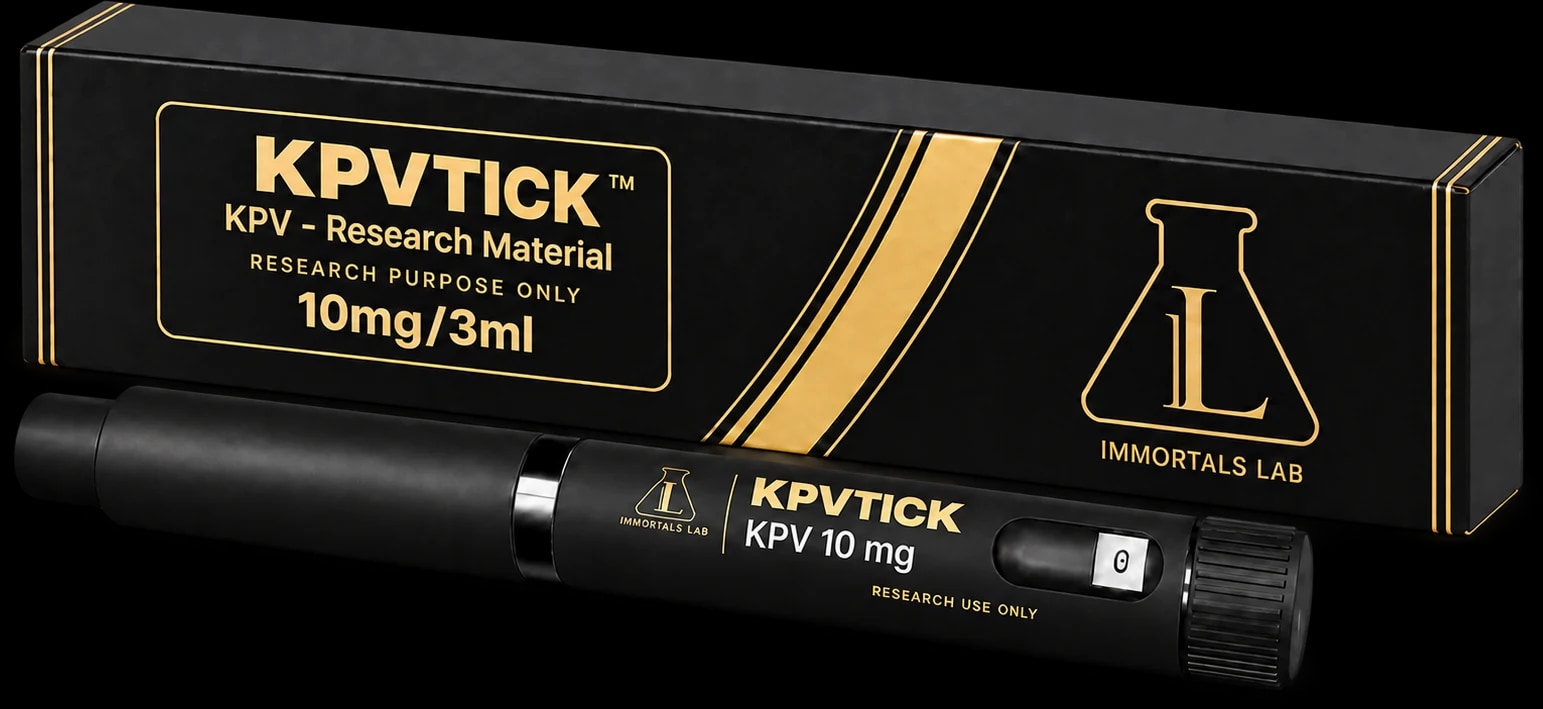
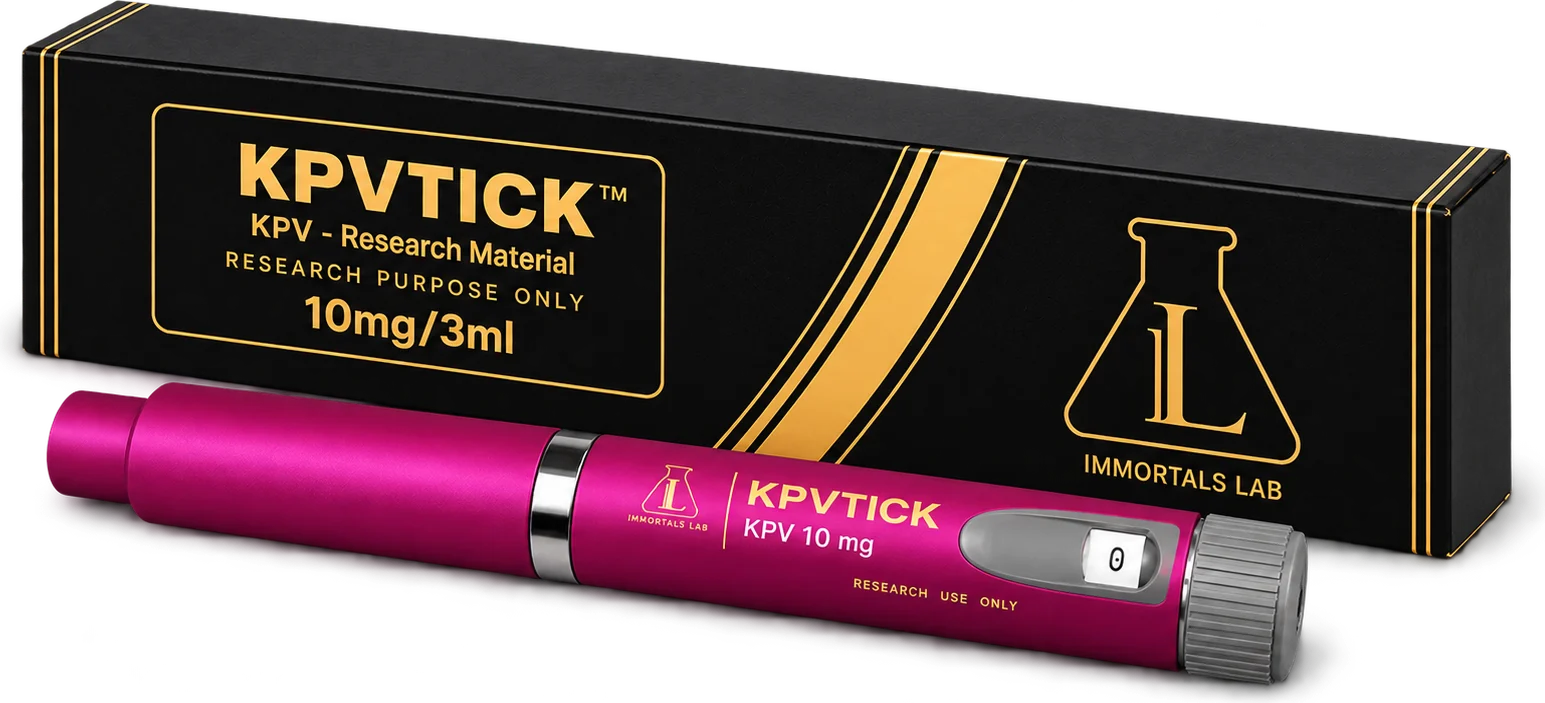
Gut & inflammation
KPV
Inflammation and gut research
Format
Add a refill for your pen
KPV 10 mg · +AED 685 each
Quantity — buy more, save more
Other quantity
Any mix counts: items from other products add up too.
Frequently paired with
Tap Add — each one counts toward your bundle saving.
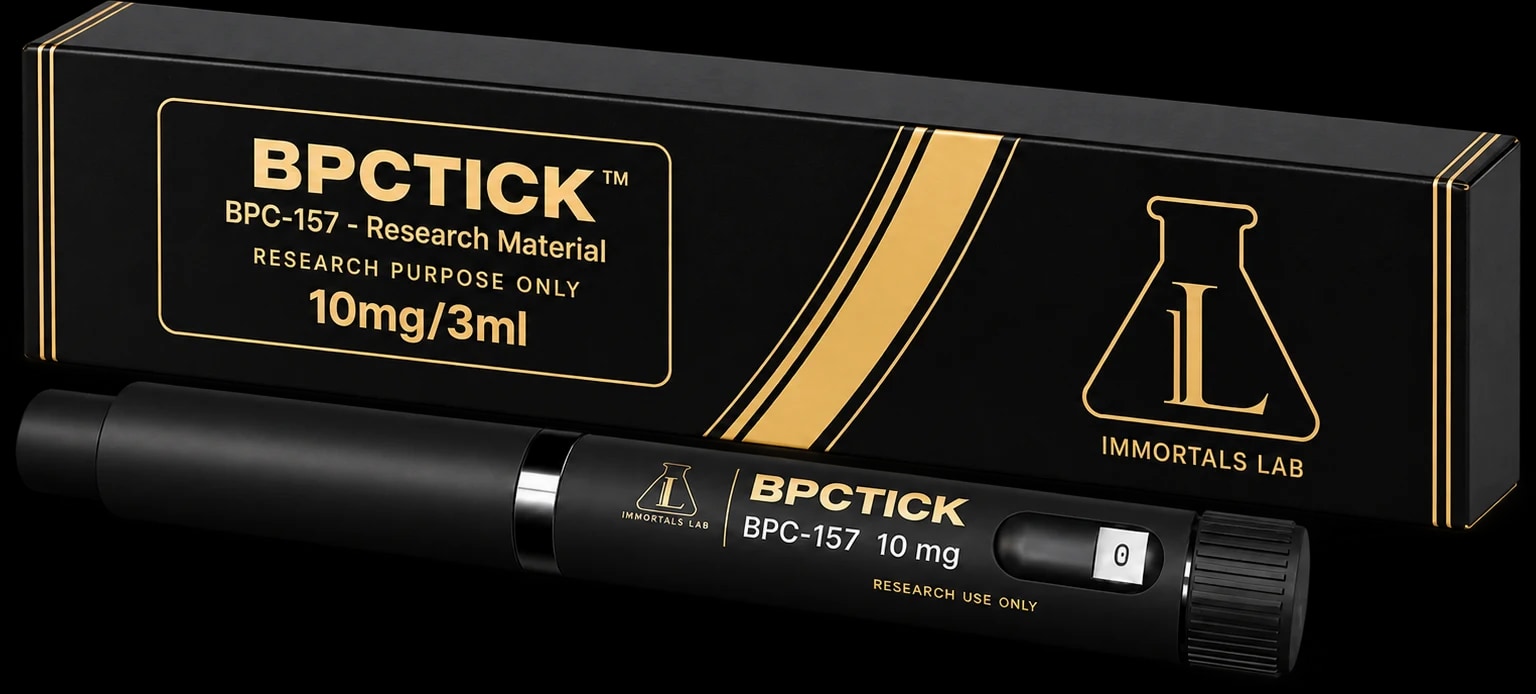
BPC-157 10 mg
AED 530
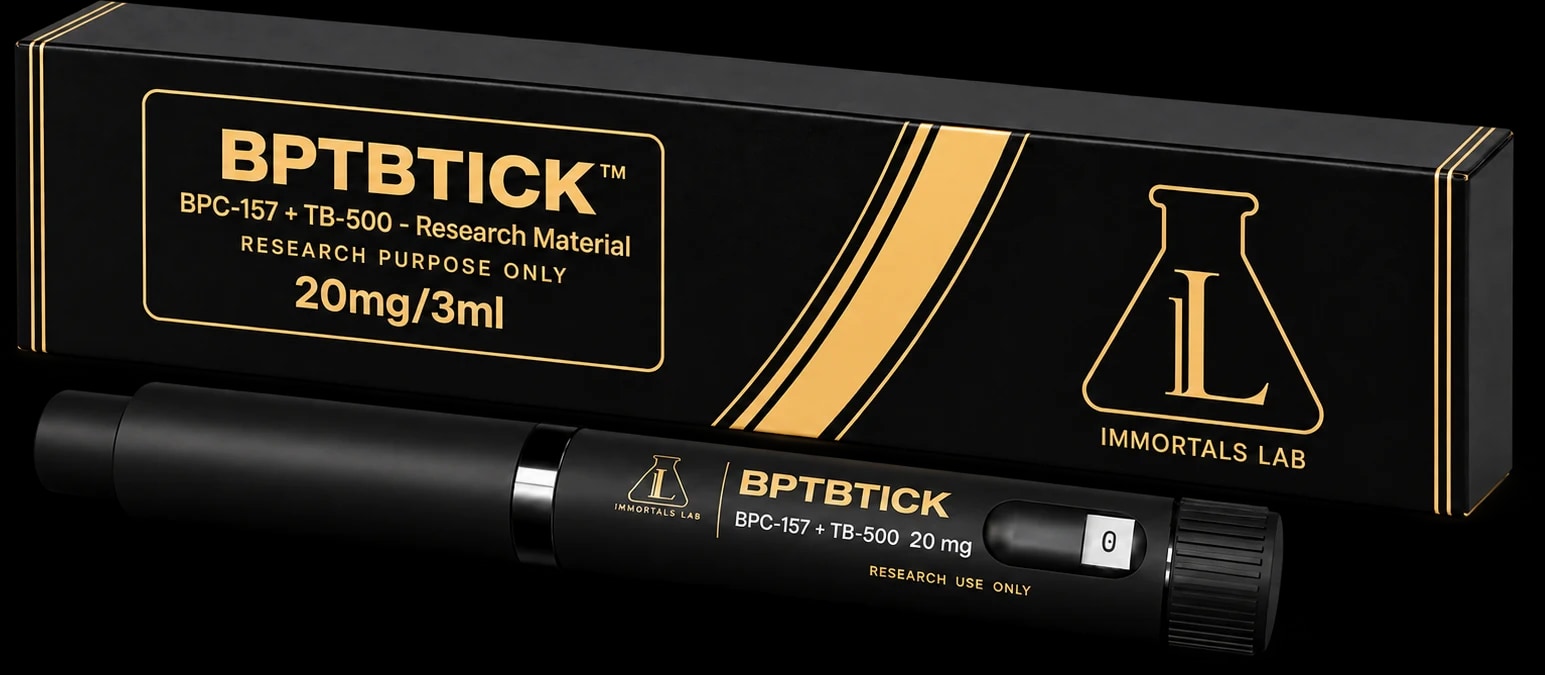
BPC-157 + TB-500 20 mg
AED 880
Also in a bundle: Gut & repair
Add another item from the catalogue
Pens are added as the reusable pen; change the format on the product page if you prefer.
The active tripeptide core of alpha-MSH. Studied for its action on NF-κB, the body's main inflammation switch, in gut and skin models.
Research use only. Supplied for laboratory and analytical research. Not a medicine or supplement, and not for human or animal use. We don't give dosing or clinical advice. Read the terms
- Presentation
- Lyophilised powder, reconstituted — 3 mL pen
Manufactured under controlled research-grade conditions. For documentation or questions about this compound, contact us on WhatsApp.
Published research
- Animal study
In cultured intestinal and immune cells and in mice with chemically induced colitis, KPV entered cells via the PepT1 transporter, dampened NF-kB signalling and reduced colitis.
Dalmasso G, et al. PepT1-mediated tripeptide KPV uptake reduces intestinal inflammation. Gastroenterology. 2008. PMID 18061177
- Animal study
In two mouse models of colitis, KPV was associated with earlier recovery, better weight regain and fewer inflammatory infiltrates, including in MC1R-deficient mice.
Kannengiesser K, et al. Melanocortin-derived tripeptide KPV has anti-inflammatory potential in murine models of inflammatory bowel disease. Inflammatory Bowel Diseases. 2008. PMID 18092346
- Animal study
In cultured intestinal cells, KPV-loaded nanoparticles reduced LPS-induced inflammatory responses, and in mice with DSS-induced colitis, colon-targeted KPV nanoparticles in a hydrogel reduced inflammatory and histological signs of colitis.
Laroui H, et al. Drug-loaded nanoparticles targeted to the colon with polysaccharide hydrogel reduce colitis in a mouse model. Gastroenterology. 2010. PMID 19909746
- Animal study
In mice, KPV reduced neutrophil accumulation in crystal-induced and IL-1β-induced peritonitis, including in mice lacking functional MC1R; unlike alpha-MSH, it did not inhibit macrophage activation in cultured cells.
Getting SJ, et al. Dissection of the anti-inflammatory effect of the core and C-terminal (KPV) alpha-melanocyte-stimulating hormone peptides. The Journal of Pharmacology and Experimental Therapeutics. 2003. PMID 12750433
Short summaries of published studies, with links to the original papers. Results in animals or cells may not apply to people. This is not medical advice and not a guide to use.
All research on KPV