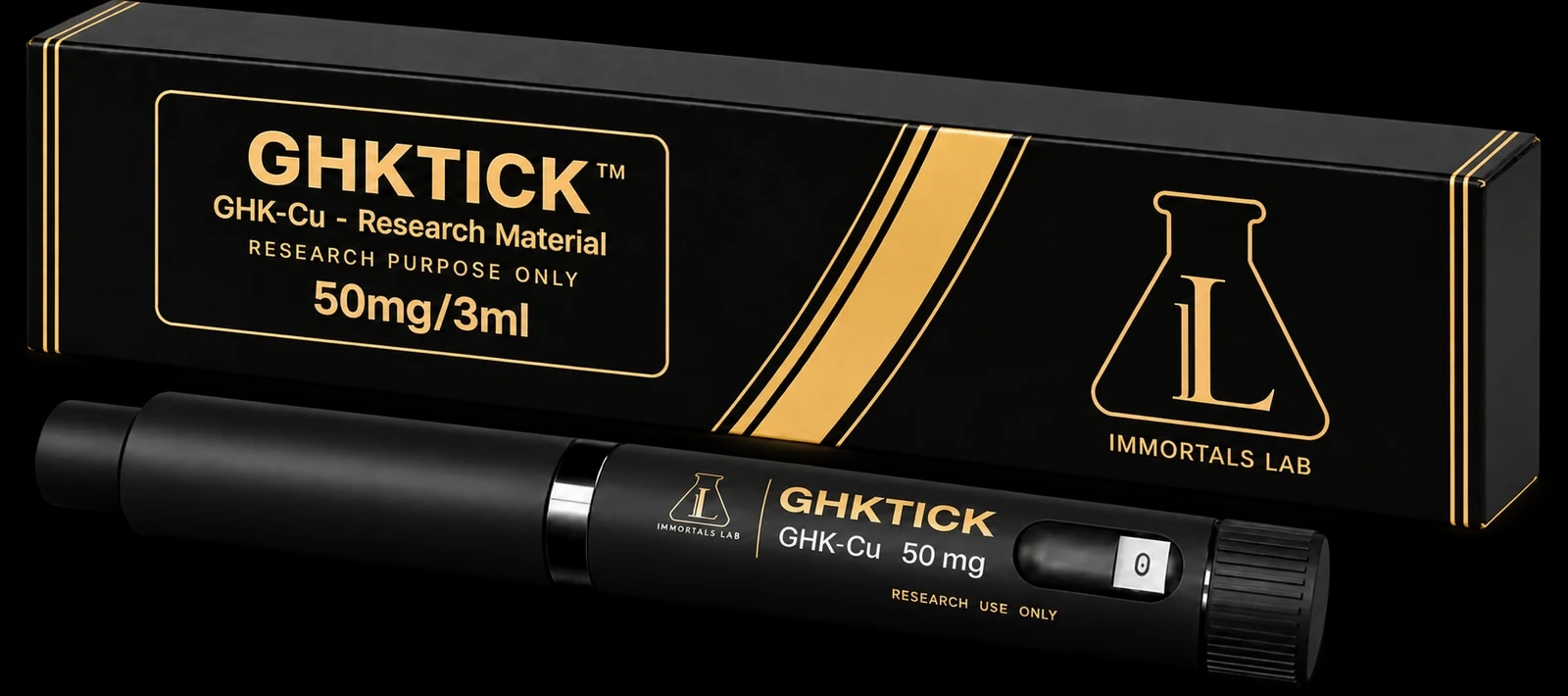
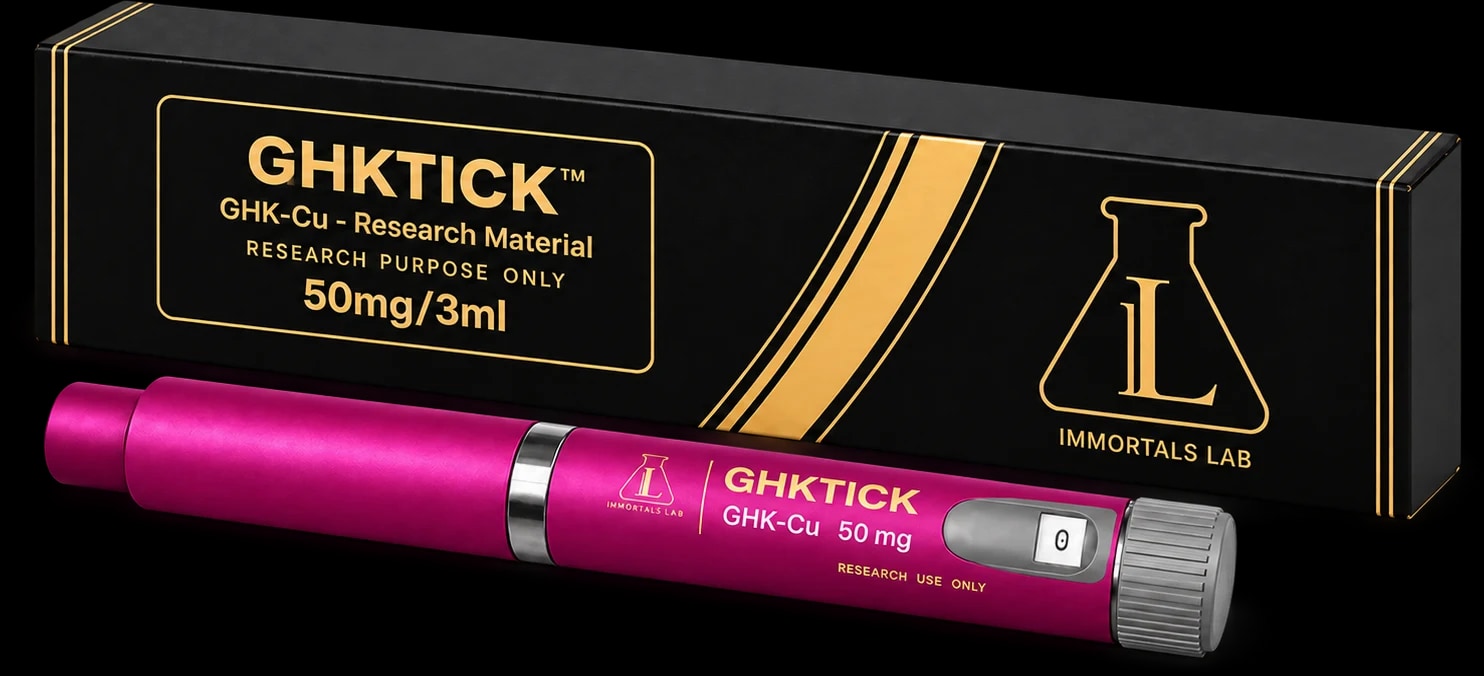
Skin repair & collagen
GHK-Cu
The collagen peptide — skin-repair research
GHK · Cu(II)
Lab tested
Tested independently by Janoshik Analytical. Open the report to see the full result.
Strength
Format
Add a refill for your pen
GHK-Cu 50 mg · +AED 635 each
Quantity — buy more, save more
Other quantity
Any mix counts: items from other products add up too.
Frequently paired with
Tap Add — each one counts toward your bundle saving.
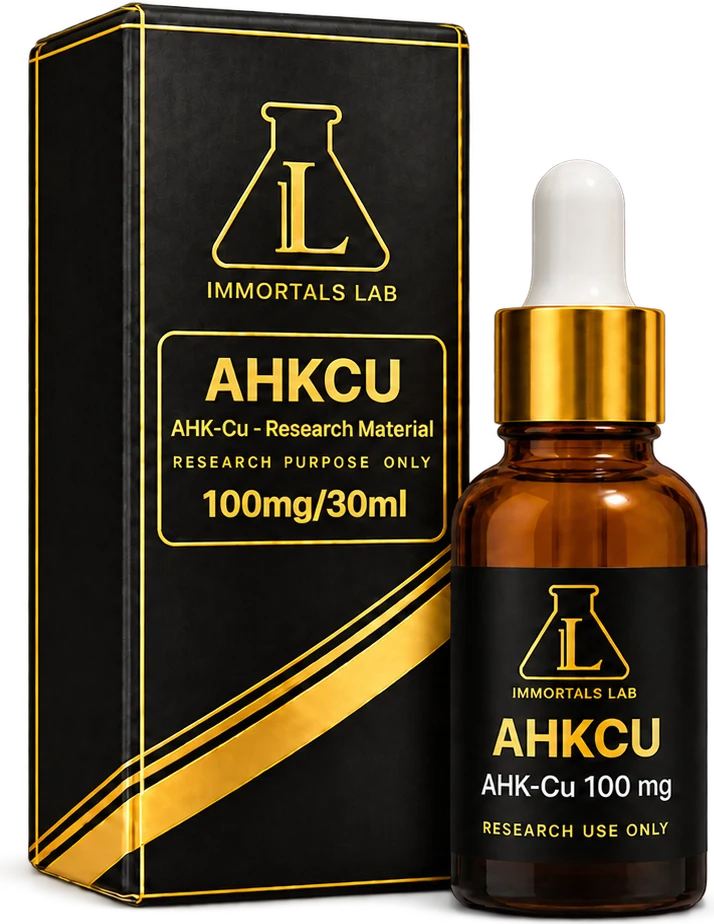
AHK-Cu 100 mg
AED 590
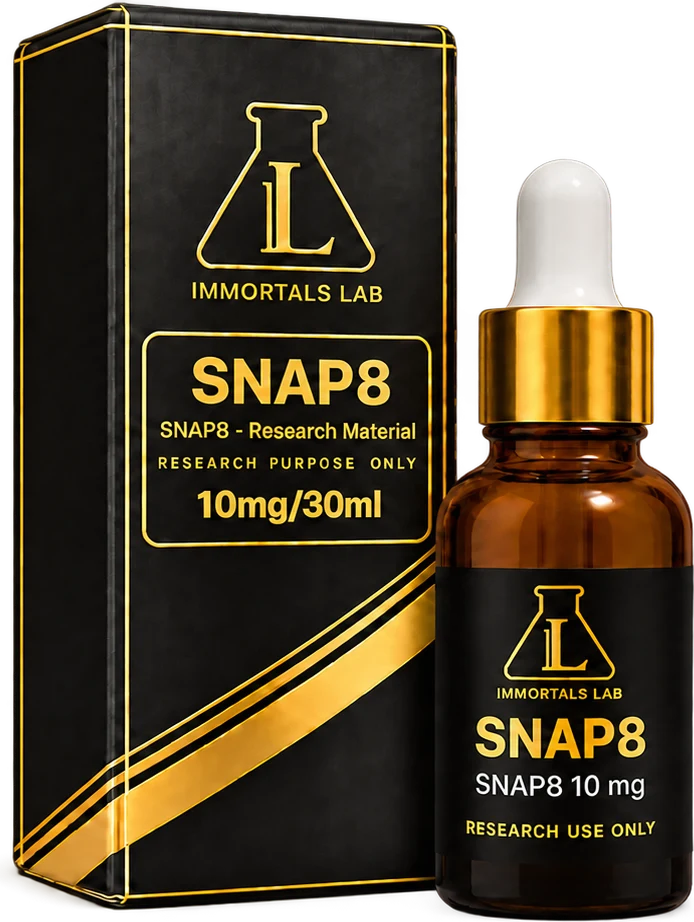
SNAP8 10 mg
AED 540
Also in a bundle: Copper skin & hair · Skin serum trio
Add another item from the catalogue
Pens are added as the reusable pen; change the format on the product page if you prefer.
A naturally occurring copper-binding peptide whose levels decline with age. Studied for its role in collagen synthesis, skin remodelling and wound-repair signalling.
Research use only. Supplied for laboratory and analytical research. Not a medicine or supplement, and not for human or animal use. We don't give dosing or clinical advice. Read the terms
- Presentation
- Lyophilised complex, reconstituted — 3 mL pen
Manufactured under controlled research-grade conditions. For documentation or questions about this compound, contact us on WhatsApp.
Published research
- Animal study
In rats with implanted wound chambers, GHK-Cu injections increased connective-tissue accumulation, including collagen and glycosaminoglycans, and raised type I and III collagen mRNA compared with saline, while a control tripeptide had no effect.
Maquart FX, et al. In vivo stimulation of connective tissue accumulation by the tripeptide-copper complex glycyl-L-histidyl-L-lysine-Cu2+ in rat experimental wounds. The Journal of Clinical Investigation. 1993. PMID 8227353
- Cell study
In cultured normal and irradiated human skin fibroblasts, GHK-Cu shortened population-doubling time, and treated irradiated cells produced more of the growth factors bFGF and VEGF early after exposure.
Pollard JD, et al. Effects of copper tripeptide on the growth and expression of growth factors by normal and irradiated fibroblasts. Archives of Facial Plastic Surgery. 2005. PMID 15655171
- Cell study
In cultured rat and human bone-forming (osteoblastic) cells, GHK-Cu increased cell attachment but not cell spreading, and slightly reduced alkaline phosphatase activity and osteocalcin production, markers of the osteoblast phenotype.
Godet D, et al. Effects of the tripeptide glycyl-L-histidyl-L-lysine copper complex on osteoblastic cell spreading, attachment and phenotype. Cellular and Molecular Biology. 1995. PMID 8747089
- Cell study
In cultured dermal fibroblasts, GHK-Cu increased MMP-2 protein and mRNA levels and the secretion of its inhibitors TIMP-1 and TIMP-2; copper ions alone reproduced the MMP-2 effect, but GHK without copper did not.
Siméon A, et al. The tripeptide-copper complex glycyl-L-histidyl-L-lysine-Cu2+ stimulates matrix metalloproteinase-2 expression by fibroblast cultures. Life Sciences. 2000. PMID 11045606
- Review
This review summarises reported effects of GHK and GHK-Cu on tissue remodelling, from wound-healing models to cited controlled studies of aged skin reporting improved elasticity and firmness and fewer fine lines and wrinkles.
Pickart L The human tri-peptide GHK and tissue remodeling. Journal of Biomaterials Science. Polymer Edition. 2008. PMID 18644225
Studied together
GHK-Cu + Thymosin β4 (TB-500)
In an open-label study without a control group in people with hair loss, scalp injections of a multi-ingredient formula containing copper tripeptide-1 (GHK-Cu), thymosin beta-4 and growth factors reduced hair shedding.
Kapoor R, Shome D. Intradermal injections of a hair growth factor formulation for enhancement of human hair regrowth - safety and efficacy evaluation in a first-in-man pilot clinical study. Journal of Cosmetic and Laser Therapy. 2018. PMID 29482481
Short summaries of published studies, with links to the original papers. Results in animals or cells may not apply to people. This is not medical advice and not a guide to use.
All research on GHK-Cu